The Pilgrim's Return: How Hajj Is Quietly Minting the Next Wave of Arab-American Changemakers
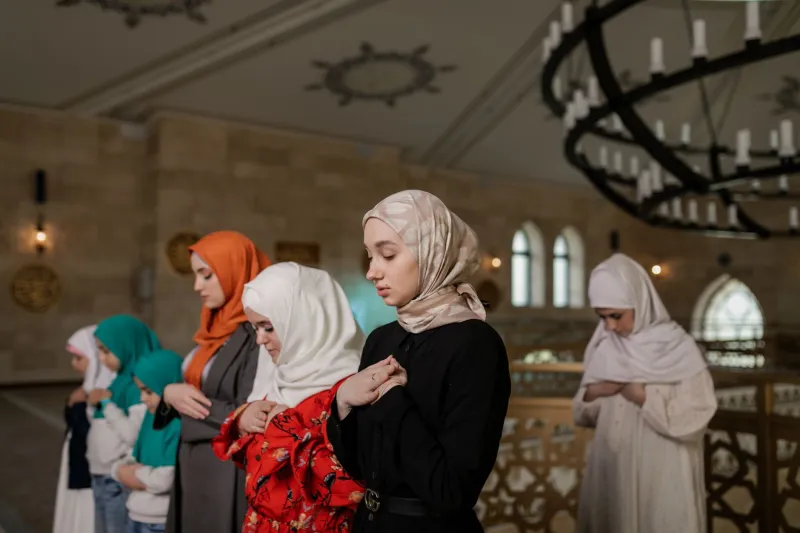
There's a moment, somewhere between the crush of millions of bodies circling the Kaaba and the stillness of a pre-dawn prayer on Mount Arafat, when something shifts. Ask anyone who's made the journey and they'll struggle to put it into words — but they'll all tell you the same thing: you don't come back the same person.
For Arab-Americans navigating dual identities in a country that often flattens their complexity into a headline, Hajj has become something more than a fifth pillar of faith. It's becoming a crucible. A reset. A place where ambition gets reexamined, purpose gets sharpened, and the noise of American hustle culture — at least briefly — goes quiet.
And increasingly, the people coming home from Mecca are bringing something back with them that's hard to quantify but impossible to ignore.
More Than a Ritual: The Experience Nobody Talks About
Let's be honest — Hajj doesn't get a lot of nuanced coverage in mainstream American media. When it shows up at all, it's usually framed around logistics: the crowds, the heat, the sheer scale of two million people in one place. What gets lost in that framing is the interior experience — the psychological and spiritual weight of standing in the same spot where prophets stood, stripped of status markers, dressed identically to the person next to you, whether they're a janitor from Jakarta or a surgeon from Jordan.
That radical leveling is exactly what resonates with young Arab-Americans who grew up navigating a society obsessed with credentials, zip codes, and LinkedIn profiles.
"I went in thinking I was going to check a box," said Nadia, a 28-year-old public health researcher from Dearborn, Michigan, who performed Hajj two years ago. "I came back questioning every single priority I had. Not in a destructive way — in a clarifying way. Like, what am I actually building, and for who?"
That question — for who? — seems to follow pilgrims home in a way that reshapes their professional trajectories in ways that are subtle but real.
The Arafat Effect
Hajj scholars and Muslim psychologists have long noted what some call the "Arafat effect" — a term for the heightened sense of accountability and interconnectedness that emerges from the Day of Arafat, the emotional peak of the pilgrimage. Standing on that plain, pilgrims engage in hours of personal reflection, supplication, and what many describe as a profound reckoning with their own mortality and purpose.
For Arab-Americans in particular, that reckoning often intersects with questions of identity that are uniquely American: How do you hold onto your roots while building a life in a country that sometimes asks you to choose? How do you pursue success without losing the values your family carried across an ocean?
Youssef, a 31-year-old entrepreneur from Houston who runs a halal food distribution startup, says Hajj gave him permission to stop compartmentalizing. "Back home — I mean, in Houston — I was always code-switching. Business mode, family mode, community mode. In Mecca, there was no code to switch. You're just a person. And I realized I wanted to build a company that felt that way too. Integrated. Honest about what it is."
His company has since partnered with several Arab-American food producers and recently launched a community investment initiative that directs a portion of profits back into immigrant-owned small businesses. He credits the clarity he found in Mecca with giving him the courage to make those decisions.
Community as a Compass
One of the most underreported dimensions of Hajj is the networking — and we mean that in the most human sense of the word. When you're standing shoulder-to-shoulder with Muslims from Malaysia, Morocco, Nigeria, and Nebraska, you start to see the global ummah not as an abstraction but as a living, breathing network of people who share something fundamental.
For Arab-American professionals, that experience often translates into a broader sense of responsibility — not just to their immediate communities, but to something larger.
Samira, a 26-year-old law student at Georgetown who performed Hajj the summer before starting law school, says the experience reframed why she wanted to practice law in the first place. "I met a woman from Syria during the pilgrimage. We couldn't really communicate — different languages — but we prayed together and we cried together. I thought about her every single day of my first year of school. She became, like, the reason I'm going into immigration law. Real and specific, not abstract."
That shift — from abstract ambition to people-centered purpose — shows up again and again in conversations with young Arab-American pilgrims. It's the difference between wanting to succeed and knowing why you want to succeed.
Returning to a Country That Doesn't Always Get It
Coming home from Hajj in America carries its own set of complications. There's the jet lag, sure. But there's also the experience of returning to a country where your faith is still, for many people, a source of suspicion rather than curiosity. Where explaining that you just spent two weeks performing one of the world's great spiritual traditions might earn you a blank stare at best.
Several of the young pilgrims we spoke with mentioned a period of readjustment — a kind of spiritual whiplash — that they hadn't anticipated. The stillness of Mecca crashing up against the pace of American life.
"The first week back, I genuinely didn't know how to function," laughed Omar, a 29-year-old software engineer from Chicago. "My inbox had 400 emails. My team was in full sprint mode on a product launch. And I'm sitting there thinking about what really matters. It took me a minute to find the balance."
But most of them also describe a new kind of groundedness — a center of gravity they didn't have before — that helps them navigate that pace with more intention.
What Comes After
The most interesting story isn't really about Hajj itself. It's about what these young Arab-Americans are doing with what they brought home.
Nadia is now leading a community health initiative in Dearborn focused on mental wellness in Arab-American households — work she says she wouldn't have had the courage to pursue before her pilgrimage. Youssef is expanding his business with a mission statement that explicitly ties profit to community. Samira is clerking for a federal judge and planning to specialize in asylum cases. Omar quietly mentors younger Arab-American developers through a professional network he helped found.
None of them would describe Hajj as a career strategy. That would miss the point entirely. But all of them will tell you that something changed — that the ancient ritual of walking in circles around a stone house in the middle of a desert somehow helped them figure out which direction they wanted to go.
At Al Farra, we talk a lot about where culture meets community. This is one of those places. Where a tradition as old as recorded history intersects with the very American drive to build something meaningful. Where faith and ambition don't compete — they clarify each other.
The pilgrims are coming home. And they've got work to do.