New Voices, Real Stories: Arab-American Filmmakers Are Rewriting the Hollywood Script
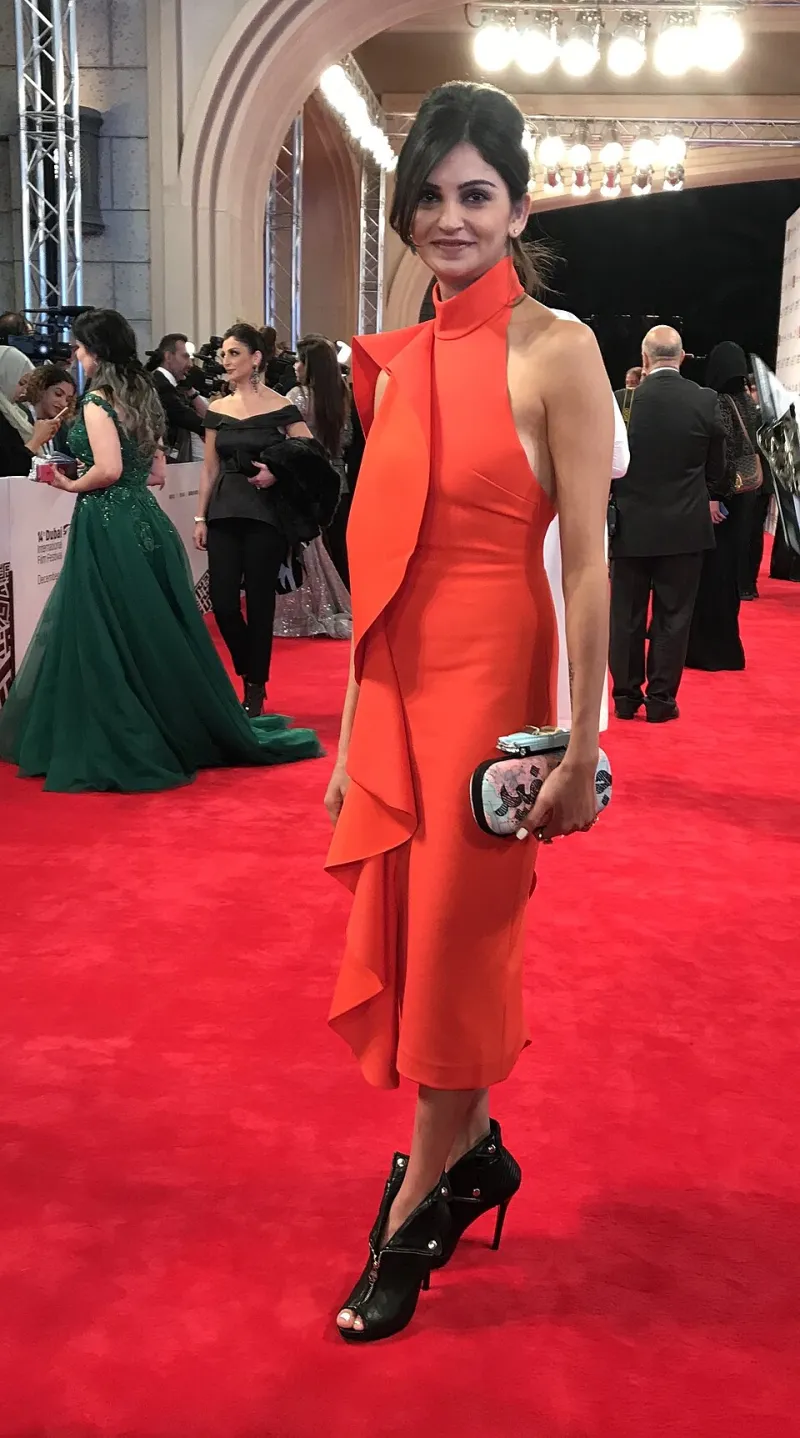
Photo: Youseftuqan, CC BY-SA 4.0, via Wikimedia Commons
For a long time, if you were Arab-American and you turned on the TV or bought a movie ticket, the experience was... complicated. You'd spot someone who looked like your uncle or your neighbor's mom, and for a split second, you'd feel seen. Then the character would open their mouth, and that feeling would evaporate. The accent was off. The motivations were flat. The whole thing felt like a costume someone put on rather than a life someone actually lived.
That's changing. Slowly, imperfectly, but genuinely — Arab-American storytellers are carving out space in an industry that spent decades either ignoring them or getting them spectacularly wrong.
The Stereotype Problem Nobody Wants to Talk About Anymore
Hollywood's track record with Arab and Middle Eastern characters has been, to put it charitably, rough. Academics and advocacy groups have been documenting it for years. The same handful of roles kept recycling: the terrorist, the oil sheikh, the mysterious belly dancer, the helpless refugee. Nuance wasn't exactly the priority.
What made it especially frustrating for Arab-American audiences was the invisibility behind the invisibility. It wasn't just that the portrayals were bad — it was that actual Arab-Americans were rarely in the room when those portrayals were being written or directed. The stories were about a community, told almost entirely without that community's input.
But a wave of new creators isn't waiting for an invitation anymore. They're building their own tables.
The Filmmakers You Need to Know
Take someone like Cherien Dabis, whose work on projects including Ramy helped introduce a generation of American viewers to the texture of Arab-American family life — the humor, the faith, the generational tension, the love that doesn't always know how to say itself out loud. Dabis has talked openly about the push and pull of trying to tell honest stories within an industry that still sometimes wants to sand down the edges.
Then there's Ramy Youssef himself, who created and stars in the Hulu series that bears his name. Ramy is the kind of show that would have been nearly impossible to greenlight ten years ago — a deeply personal, spiritually curious, occasionally uncomfortable portrait of a young Egyptian-American man trying to figure out who he is. It won a Golden Globe. It sparked real conversations. And it did all of that without softening itself to make non-Arab audiences more comfortable.
On the film side, directors like Haifaa al-Mansour — the first female filmmaker from Saudi Arabia, now working across international projects with US distribution — are proving that Middle Eastern perspectives can travel, that they resonate with audiences who don't share that specific cultural background but recognize something universal in the storytelling.
Younger filmmakers are coming up behind them, many of them graduates of American film schools who grew up watching the same Hollywood blockbusters as everyone else but also grew up eating their grandmother's kibbeh and hearing Arabic at the dinner table. That dual fluency is showing up on screen in interesting ways.
Streaming Changed the Math
It's worth being honest about why this shift is happening now, and a big part of the answer is business. Streaming platforms — Netflix, Hulu, Amazon Prime, Apple TV+ — are hungry for content in a way that traditional studios never were. They're also sitting on subscriber data that tells them, pretty clearly, that diverse audiences are large and engaged and willing to watch stories that feel specific rather than generic.
That's not a purely altruistic motivation, and nobody should pretend it is. But the practical effect has been real. Projects that would have struggled to find funding through traditional studio channels are getting made. Arab-American creators are getting meetings, getting deals, getting the chance to actually finish something and put it in front of people.
The A24 effect matters here too. The indie studio that built its reputation on voice-driven, culturally specific storytelling has helped create an environment where different is a selling point rather than a liability. That's a better climate for Arab-American filmmakers than anything that existed a decade ago.
What Authentic Actually Looks Like
One of the things that comes up again and again when you talk to Arab-American creators is the question of what authenticity even means in this context. The Arab-American community is not a monolith. There are Lebanese-Americans and Yemeni-Americans and Egyptian-Americans and Palestinian-Americans and Syrian-Americans, and those communities have different histories, different relationships to religion, different class experiences, different degrees of assimilation.
The goal isn't to produce one definitive Arab-American story. It's to produce many stories — messy, contradictory, funny, sad, specific — the same way Hollywood produces many kinds of stories about white Americans without anyone expecting them all to say the same thing.
That's the standard being pushed for. Not a corrective myth to replace the old stereotypes, but genuine plurality.
The Road Still Has Bumps
None of this is a victory lap moment. Arab-American creators still deal with gatekeepers who want to soften political edges, particularly anything touching on the Palestinian experience or US foreign policy in the Middle East. There's a difference between Hollywood being willing to show Arab-American family dinners and Hollywood being willing to engage with the full weight of what many Arab-Americans carry.
And the numbers, while improving, still don't reflect the size of the Arab-American population in this country — estimated at somewhere between 3.5 and 4 million people, concentrated in cities like Detroit, New York, Los Angeles, and Chicago.
But the direction of travel feels different now. The conversation feels different. And for Arab-American audiences who have spent years watching themselves refracted through other people's assumptions, even imperfect progress is something worth paying attention to.
At Al Farra, we'll keep watching — and keep celebrating the people doing the work.