Shawarma, Saffron, and Sumac: How Middle Eastern Food Became America's Favorite New Obsession
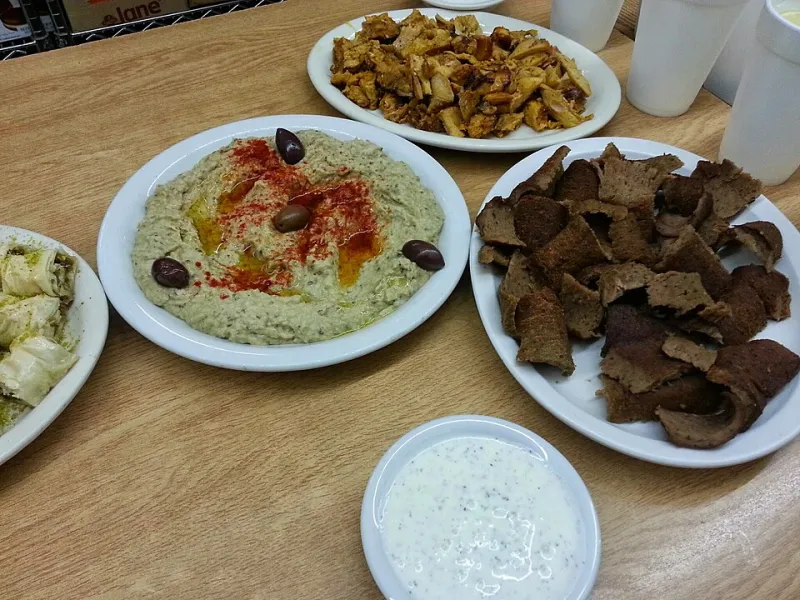
Photo: David Crummey from Mesa, AZ, USA, CC BY 2.0, via Wikimedia Commons
Something happened to the American palate over the last few years, and if you've been paying attention, you probably tasted it coming. The same country that once considered hummus exotic now has an entire grocery store aisle dedicated to it. Shakshuka shows up on weekend brunch menus from Portland to Atlanta. And the line of people waiting for a lamb flatbread at a Yemeni spot in Brooklyn on a Tuesday night tells you everything you need to know about where things are headed.
Middle Eastern food — Levantine, Persian, North African, Gulf — is having a genuine moment in America. Not a trend-piece moment that evaporates in six months, but a deep, structural shift in how people eat and what they're looking for when they sit down at a table.
Here are five things driving that shift right now.
1. Levantine Food Found Its Fine Dining Voice
For years, Lebanese and Syrian cuisine in the US lived mostly in the realm of casual spots and family restaurants — which was wonderful, but also meant it rarely got the kind of critical attention or price point that signals cultural prestige in the American food world.
That's flipped. Chefs like Reem Assil in the Bay Area have built nationally recognized restaurants around Arab baking traditions, earning James Beard nominations and the kind of press coverage that sends food tourists cross-country. In New York, spots like Beit and Zou Zou's are reframing Levantine food as something worthy of a celebration dinner, not just a quick weeknight meal.
The cooking itself hasn't necessarily changed — many of these chefs are working with their grandmothers' recipes as a foundation. What's changed is the framing, the presentation, and the willingness of American diners to pay for an experience built around these flavors. That shift in perception matters enormously for the broader culture around Middle Eastern food.
2. Persian Cuisine Is Finally Getting Its Due
Iranian food has long been one of the great underrepresented cuisines in American restaurants, which is wild when you consider how complex and beautiful it is. The layered rice dishes with their crispy tahdig bottoms. The herb-forward stews. The balance of sour and sweet that runs through so much of the cooking.
Chefs like Nasim Alikhani of Sofreh in Brooklyn have been slowly, steadily changing that. Sofreh opened in 2018 and has become something of a pilgrimage destination — a place where Persian-Americans bring their parents and where food writers bring their notebooks. The restaurant doesn't translate itself down for non-Iranian diners; it trusts the food to speak.
That trust is increasingly being rewarded. Persian cooking is showing up in meal kit services, in cooking content across YouTube and TikTok, and in a growing number of restaurants outside of the traditional Iranian-American hubs in Los Angeles and Northern Virginia. The saffron is spreading.
3. North African Flavors Are Crossing Over
Moroccan cuisine has had some presence in the US for a while — the tagine, the couscous, the mint tea ritual — but it often got flattened into a kind of theatrical exoticism, all lanterns and low cushions. The food was almost secondary to the vibe.
What's happening now is different. Tunisian and Algerian cuisines, which rarely got any spotlight at all, are starting to find American audiences through chefs who are less interested in atmosphere gimmicks and more interested in the actual depth of the cooking. Harissa is everywhere — in fast-casual chains, in grocery stores, on the tables of restaurants that have nothing to do with North Africa. Chermoula is showing up as a marinade at upscale steakhouses. Merguez sausage has made its way onto brunch menus that also serve avocado toast.
The crossover is happening through flavor first. People try something and want more of it, and that curiosity pulls them toward the source.
4. Arab Street Food Got a Glow-Up
Shawarma was already popular. Falafel was already popular. But the fast-casual wave of the last decade created an opening for Arab street food concepts to scale and professionalize in ways that changed how Americans encounter these dishes.
Chains like The Halal Guys broke through nationally. Newer concepts are being more deliberate about quality and sourcing — using house-made sauces, sourcing better meat, treating the pita like it matters (because it does). There's a version of this that's just trend-chasing, and there's a version that's genuinely elevating the form. The best operators are doing the latter.
What's interesting is how this has created a gateway effect. Someone tries a really good shawarma wrap at a fast-casual spot, gets curious, and ends up at a sit-down Lebanese restaurant six months later. The categories feed each other.
5. Food as Community, Not Just Cuisine
Maybe the most meaningful thing happening isn't on any menu at all. It's the way Middle Eastern food is functioning as a gathering point — a reason for people to come together, learn something, share something.
Pop-up dinners built around Palestinian home cooking are selling out in cities like Chicago and Houston. Yemeni coffee shops — qishr, the spiced coffee husks drink that's distinct from Turkish coffee — are becoming neighborhood anchors in places like Brooklyn and Dearborn. Cooking classes focused on Persian New Year dishes or Moroccan holiday traditions are drawing people who aren't from those communities but are genuinely curious.
For Arab-Americans and Middle Eastern diaspora communities across the US, there's something particularly meaningful about watching the food they grew up with — the food that sometimes made them feel different in a school cafeteria — become something people seek out and celebrate.
It's not just a food trend. It's a cultural conversation happening one plate at a time. And from where we sit at Al Farra, it's a conversation we're very happy to be part of.