Something Borrowed, Something Bold: Inside the Arab-American Wedding Boom Rewriting the Rules of 'I Do'
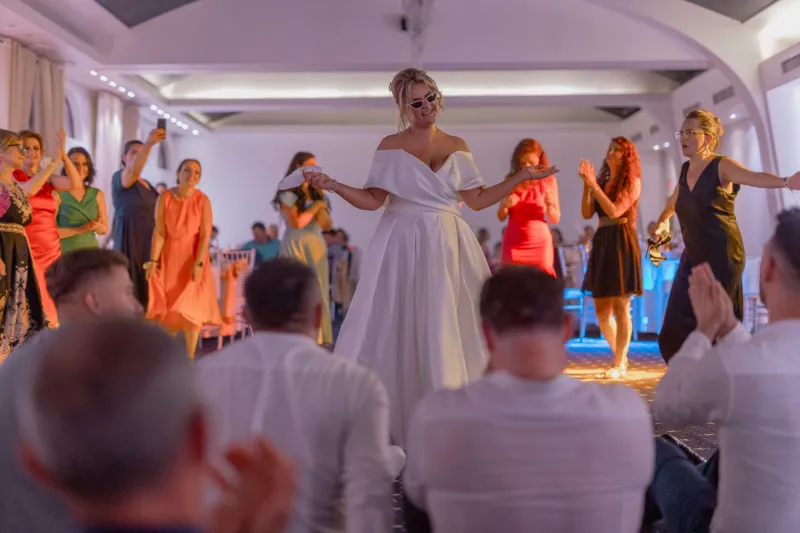
Let's be honest — Arab weddings have always gone hard. The music is loud, the food is endless, the guest list somehow keeps growing even after the RSVP deadline, and the dancing doesn't stop until someone's uncle finally sits down around 2 a.m. But something is shifting in how second and third-generation Arab-Americans are approaching the biggest celebration of their lives. They're not choosing between their heritage and their personal style. They're doing both — and the wedding industry is scrambling to keep up.
More Than a Party, It's a Statement
For Dina and Karim, a Lebanese-Egyptian couple who married in Houston last spring, the planning process felt like navigating two different worlds at once. Dina wanted a candlelit garden ceremony with a curated playlist and a minimalist floral aesthetic she'd been pinning for years. Karim's family expected a zaffeh — the traditional procession complete with drummers, dabke dancers, and enough ululation to rattle the chandeliers. They didn't compromise. They did both.
"We had the ceremony we dreamed of, and then the zaffeh happened right before dinner and honestly it was the highlight of the night," Dina told us. "People who had never seen anything like it were losing their minds in the best way."
That blend — intimate modern ceremony meets full-throttle cultural celebration — is becoming a signature move for Arab-American couples across the country. And vendors, venues, and planners are taking serious notice.
The Numbers Don't Lie
The Arab-American wedding market is quietly becoming one of the more lucrative niches in the U.S. events industry. While exact figures are hard to pin down, wedding planners who specialize in this demographic report average budgets running well above the national average, which already sits around $30,000 according to recent industry surveys. Multi-day events — think a henna night on Friday, the main ceremony Saturday, and a post-wedding brunch Sunday — are increasingly common, which means couples are booking venues for multiple events, hiring more vendors, and feeding a lot more people over a longer stretch of time.
Planners like Nadia Saleh, who runs a boutique event company in the Detroit metro area (home to one of the largest Arab-American populations in the country), says her bookings have nearly doubled in the past three years. "These families want everything — the tradition, the aesthetics, the experience. And they're willing to invest in it."
The Henna Night Glow-Up
If there's one pre-wedding tradition that's having a serious cultural moment, it's the henna night. What was once a low-key gathering of women in someone's living room has evolved into a full-blown event — think mood lighting, coordinated outfits, a professional henna artist with a two-month waitlist, and a custom dessert table that ends up all over Instagram.
For Yasmine, a Palestinian-American bride from New Jersey, her henna night had 80 guests, a live oud player, and a color palette she spent three months perfecting. "My mom thought I was being extra," she laughed. "But honestly, it was the most 'us' night of the whole wedding weekend."
The henna night has become a space where Arab-American women in particular are reclaiming and reimagining a tradition on their own terms — making it as elaborate or as intimate as they want, and centering it as a genuine celebration rather than just a warm-up act.
Vendors Are Finally Catching Up
For years, Arab-American couples planning weddings in the U.S. faced a frustrating gap: mainstream wedding vendors often didn't understand the cultural context, and finding someone who could execute a zaffeh, source the right food, or even pronounce the couple's names correctly was a whole separate project.
That's changing. A growing network of Arab-American photographers, caterers, DJs, florists, and planners has emerged in major cities — and they're not just serving their own communities. Couples from all backgrounds are seeking out vendors who specialize in culturally rich, high-energy celebrations, and Arab-American wedding professionals are delivering.
Photographer Rami Aziz, based in Los Angeles, says at least a third of his clients now are non-Arab couples who found him through referrals or social media and want that same "alive" energy in their wedding photos. "There's something about the way we celebrate that people connect with," he said. "It's joyful, it's communal, it's real."
The Balancing Act Nobody Talks About
Of course, not every aspect of this cultural negotiation is easy. Many couples describe navigating real tension between family expectations and personal vision — and that tension doesn't always resolve as neatly as Dina and Karim's zaffeh story.
Some families push back on anything that strays too far from tradition. Others project very specific ideas about what the wedding should look like based on what was done back in the home country, which may not translate directly to a venue in suburban Virginia or a budget that doesn't include flying in a 20-piece band from Beirut.
There's also the question of interfaith and intercultural marriages within the Arab-American community itself — a Lebanese Maronite marrying a Palestinian Muslim, for example, or a Yemeni-American marrying someone with no Middle Eastern background at all. These weddings require even more creative choreography, blending not just aesthetics but rituals, officiant choices, and family dynamics.
"We had two separate ceremonies," said Omar, who married his partner Sarah (Irish-American, Catholic) in Chicago last year. "A nikah with our imam and a church ceremony with her family. And then one massive reception where we basically threw everything at the wall and it worked."
What This Moment Really Means
At its core, the Arab-American wedding boom is about something bigger than flower arrangements and catering menus. It's about a generation that grew up straddling two worlds finally having the confidence — and the resources — to stop choosing between them.
These weddings are cultural declarations. They say: we are from here, and we are from there, and we are not going to shrink either part of ourselves to make the day easier to categorize. The zaffeh and the first dance can coexist. The mansaf and the charcuterie board can share a table. The grandparents can cry at the traditional vows and the college friends can go wild during the DJ set, and somehow it all makes sense.
At Al Farra, we think that's worth celebrating — loudly, and probably with a lot of food. The Arab-American wedding isn't just a party. It's a portrait of who this community is becoming. And from where we're sitting, it looks pretty beautiful.