From Alphabet to Identity: The Arab-American Teachers Transforming How Arabic Is Learned in US Schools
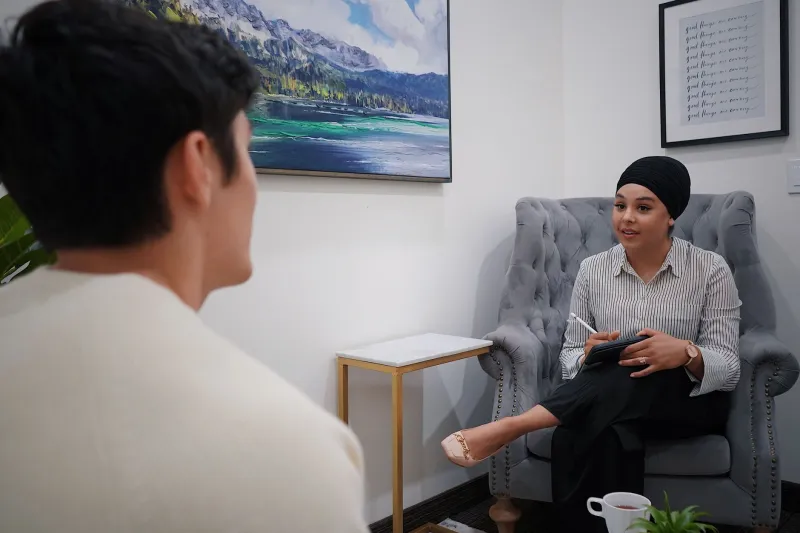
There's a moment that Nadia Khalil, a high school Arabic teacher in Dearborn, Michigan, describes as the one that changed everything for her. A teenage student — born in the US to Lebanese parents — raised his hand mid-lesson and asked, point blank: "Why does this matter if my grandma already thinks my Arabic is embarrassing?"
She paused. Then she scrapped the lesson plan entirely.
"That question told me everything," she says. "He wasn't struggling with the language. He was struggling with the shame around it."
That pivot — away from textbook Arabic and toward something more emotionally honest — is exactly the kind of shift a new generation of Arab-American educators is making inside classrooms across the country. And the ripple effects are being felt far beyond Dearborn.
Not Your Grandfather's Arabic Class
For decades, Arabic instruction in American schools — where it existed at all — followed a pretty rigid template: Modern Standard Arabic (MSA), formal grammar rules, and a curriculum designed more for diplomats than for kids trying to talk to their tias and jiddo. The result was a generation of heritage learners who could technically conjugate a verb but couldn't hold a real conversation at a family dinner.
Today's Arab-American educators are pushing back on that model hard. Teachers like Rania Aziz, who runs an Arabic immersion program at a charter school in Houston, argue that treating MSA as the only "legitimate" form of Arabic does more harm than good — especially for students who already speak a dialect at home.
"Imagine telling a kid from Georgia that the way his family talks isn't real English," Aziz says. "That's what we were doing to Arabic speakers. And it was killing their confidence."
Her classroom now weaves Levantine, Egyptian, and Gulf dialects into lessons alongside MSA, letting students see their home language as a foundation rather than a flaw. The results, she says, have been dramatic. Participation is up. Test scores are up. And more importantly, students are actually using the language outside of class.
Two Audiences, One Classroom
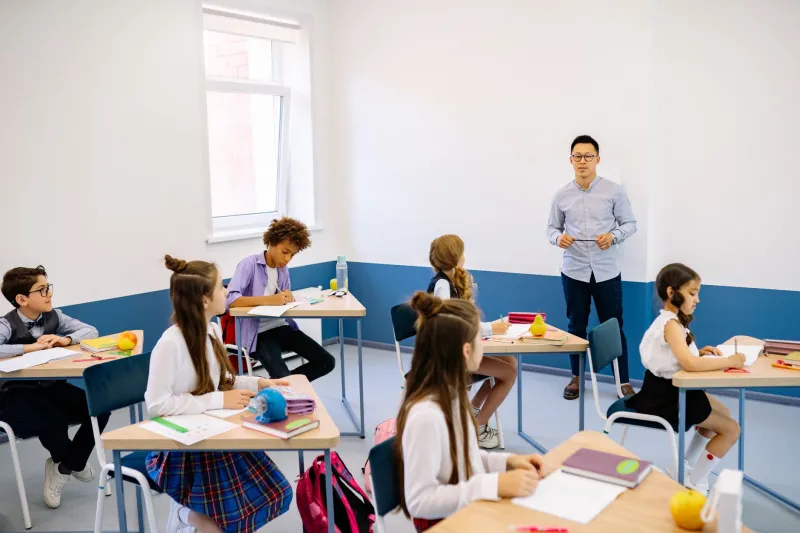
One of the more fascinating challenges these educators face is teaching a room that's often split right down the middle — heritage learners on one side, total beginners on the other. It's a dynamic that would give most teachers a headache, but many Arab-American instructors see it as a feature, not a bug.
Youssef Mansour, who teaches Arabic at a public high school in Chicago's northwest suburbs, has built his entire curriculum around that tension. Heritage students serve as informal cultural consultants for beginners, explaining context and nuance that no textbook could capture. Meanwhile, beginners bring a fresh-eyed curiosity that sometimes rekindles a heritage speaker's appreciation for a language they'd started to take for granted.
"When a kid who grew up in Iowa hears Arabic for the first time and says, 'Wait, that's actually beautiful' — you can watch the heritage kids sit up a little straighter," Mansour says. "Pride is contagious."
His classroom has become something of a model for other districts looking to grow their world language programs, and he's been invited to consult with school boards in three different states over the past two years.
The Tech Assist
It's not just pedagogy that's shifting — it's also the tools. A handful of Arab-American educators have started developing their own supplementary digital materials, frustrated by the lack of culturally relevant content in mainstream Arabic learning apps and platforms.
Sarah Haddad, a curriculum developer and former classroom teacher based in Northern Virginia, spent two years building a library of short-form video lessons featuring Arab-American storytellers, chefs, musicians, and athletes talking about their lives — in Arabic. The goal was simple: give students a reason to want to understand.
"Every kid in America knows what a YouTube video looks like," she says. "So we made Arabic feel like it belonged in that world. Not just in history books."
Her content has been adopted by schools in California, Texas, and New Jersey, and she's currently in talks with a major edtech company about a broader distribution deal.
Language as Lifeline
Beyond the classroom mechanics, there's a deeper current running through all of this work: the idea that language preservation is a form of cultural survival.
For many Arab-American families, Arabic is the thread connecting grandchildren to grandparents, diaspora communities to homelands, and present-day identities to centuries of history. When that thread frays — as it often does across immigrant generations — something irreplaceable gets lost.
"Language isn't just communication. It's memory," says Dr. Leila Barakat, a professor of applied linguistics at a university in Los Angeles who has spent years studying Arabic heritage education in the US. "When a community loses its language, it loses its ability to pass down the most intimate parts of itself."
That's a weight that many Arab-American teachers carry consciously into their classrooms. It shapes not just what they teach, but why they teach it — and why they often go well beyond their job descriptions to make it work.
Building the Pipeline
One of the quieter challenges in this space is simply the shortage of qualified Arabic teachers in American schools. Unlike Spanish or French, Arabic is still treated as a niche offering in most districts, which means fewer resources, fewer trained teachers, and fewer students who even know the option exists.
Educators like Khalil and Mansour are working to change that by mentoring younger Arab-Americans who are considering careers in education. Several have partnered with local universities to create teacher training pipelines specifically for Arabic instruction — a grassroots effort to build the field from within.
"We can't wait for the system to figure this out on its own," Khalil says. "We have to grow our own teachers."
It's a long game. But then again, so is language itself.
A Different Kind of Fluency
What's emerging from all of this isn't just better Arabic instruction — it's a broader shift in how American schools think about what language learning is for. These educators are making the case that fluency isn't just a skill on a college application. It's a bridge. Between cultures. Between generations. Between who you are and where you come from.
And in classrooms from Dearborn to Houston to the Virginia suburbs, that bridge is being built one lesson at a time — by teachers who know, from the inside out, exactly how much is riding on it.