Stethoscopes and Stories: How Arab-American Healthcare Workers Are Humanizing the American Hospital Experience
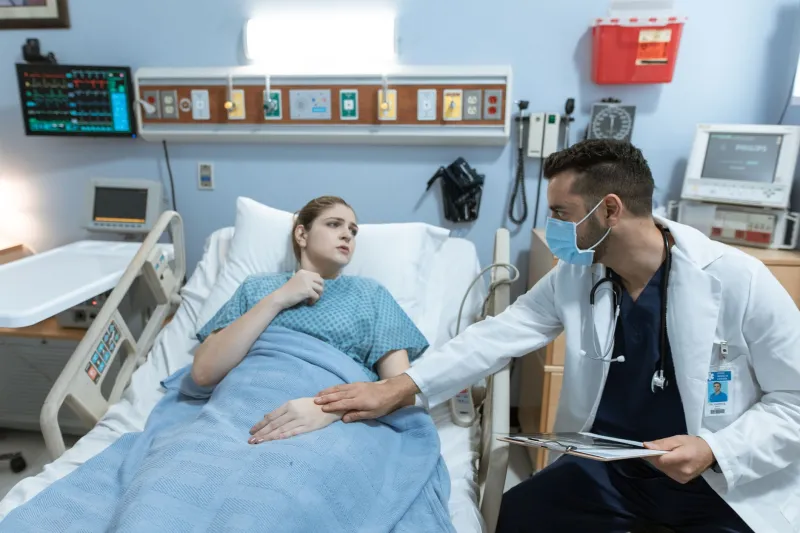
There's a moment Dr. Layla Hamdan describes that most physicians never have to think about. She's standing at the foot of a patient's bed in a Detroit hospital — an elderly Yemeni man, recently arrived, terrified, and completely alone in a system that doesn't speak his language, literally or culturally. The attending physician has already explained the diagnosis twice. The man just stares. Not because he doesn't understand medicine. Because nobody in that room has thought to ask who should be in it.
"In our culture, you don't tell a family member they have cancer without the family present," Dr. Hamdan explains. "That's not ignorance. That's love. That's protection. And when the system ignores that, it doesn't just feel cold — it causes real harm."
This is the world Arab-American healthcare professionals navigate every single day. And increasingly, they're not just navigating it — they're changing it.
More Than a Language Barrier
When people talk about diversity in medicine, the conversation often stops at representation — getting more faces that look like underserved communities into white coats. That matters, obviously. But the Arab-American doctors and nurses who spoke with Al Farra describe something deeper going on. Something that has less to do with optics and more to do with outcomes.
Arab-American communities in the US — concentrated in places like Dearborn, Michigan; Jersey City, New Jersey; and Houston, Texas — are among the fastest-growing immigrant populations in the country. Many of them are elderly, recent arrivals, or first-generation Americans who grew up code-switching between two worlds. When they walk into a hospital, they often bring with them a completely different framework for what healthcare even means.
Family isn't a visitor. Family is the care team. Decisions aren't made by the individual patient alone — they're made collectively, with parents, spouses, and sometimes extended relatives all weighing in. Religion shapes everything from dietary needs during recovery to how death and dying are discussed. And trust? Trust is earned through relationship, not just credentials.
"I've watched patients refuse treatments not because they didn't trust the medicine, but because they didn't trust the messenger," says Rami Khalil, a registered nurse working in a community health clinic in suburban Chicago. "When I walk in and greet them in Arabic, when I ask about their family before I ask about their symptoms — something shifts. They relax. They tell me things they never told the doctor before me."
Those things, it turns out, are often clinically critical.
The Cultural Competency Gap Nobody Wants to Talk About
American medical schools have made strides in cultural competency training over the last decade. But ask any Arab-American healthcare worker and they'll tell you: a one-semester elective doesn't cut it. The gap between textbook awareness and lived fluency is enormous.
Nurse practitioner Dina Saad, who works with refugee populations in Nashville, puts it bluntly. "You can teach someone that Muslims fast during Ramadan. What you can't teach in a classroom is how to notice that a patient isn't telling you they've been skipping their medication because they're embarrassed to admit they've been fasting, and they don't want to seem like they're not following the doctor's orders." That kind of reading between the lines, she says, comes from growing up in the culture — from understanding not just the language but the emotional logic underneath it.
The consequences of that gap aren't abstract. Studies have shown that language barriers in healthcare are associated with longer hospital stays, higher rates of misdiagnosis, and lower patient satisfaction scores. For Arab-American communities specifically, cultural mismatches have been linked to delayed care-seeking, undertreated chronic conditions, and a deep-seated distrust of institutions that has only deepened in the post-9/11 era.
What Arab-American healthcare workers bring isn't just translation. It's interpretation — of context, of silence, of what isn't being said.
Building the Bridge, Brick by Brick
Across the country, Arab-American medical professionals aren't just showing up for their shifts. They're building infrastructure.
In Dearborn — home to one of the largest Arab-American populations in the US — healthcare providers have worked alongside community organizations to develop culturally tailored chronic disease management programs. These aren't just pamphlets printed in Arabic. They're programs that account for the central role of food in Arab social life, that work with community imams to reinforce health messaging, and that hold appointments during hours that work for families who can't afford to take time off work.
In New York, a coalition of Arab-American nurses has been quietly pushing hospital systems to rethink their patient intake forms — adding questions about preferred family decision-making structures, religious considerations, and language needs that go beyond the standard "do you need an interpreter" checkbox.
And in Los Angeles, a group of Arab-American medical students has launched a mentorship program specifically designed to bring more Arabic-speaking students into healthcare careers, with a focus on primary care and community medicine — the specialties that serve underserved populations most directly.
"We're not waiting for the system to figure this out," says Dr. Omar Nassar, one of the program's founders. "We're just doing it."
The Cost of Being the Bridge
It would be easy to tell this story as a simple triumph narrative. But the Arab-American healthcare workers Al Farra spoke with were candid about the weight they carry.
Being the cultural liaison, the unofficial translator, the person colleagues call when they don't know how to handle a difficult family situation — it's exhausting. It's often unpaid labor, layered on top of already demanding jobs. And it comes with its own kind of emotional toll.
"I love my patients. I genuinely do," says Rami Khalil. "But there are days when I've spent my entire shift being the bridge between two worlds, and I go home completely empty. Because nobody's holding me up while I'm holding everyone else."
There's also the question of professional identity. Arab-American healthcare workers describe a persistent pressure to downplay their backgrounds in certain institutional settings — to be "just a nurse" or "just a doctor" rather than someone whose cultural identity is an asset. Some describe subtle biases in how their clinical judgment is received. Others talk about navigating post-9/11 stereotypes that still linger in break rooms and staff meetings.
The resilience required to show up anyway, and to keep building, is its own kind of medicine.
What the Rest of the Industry Can Learn
The shift Arab-American healthcare workers are driving isn't just about serving Arab-American patients. It's about a broader reimagining of what patient-centered care actually looks like — one that the entire American healthcare system is slowly, reluctantly starting to absorb.
The idea that family is part of the care team. That trust is a clinical variable. That culture shapes how people understand their own bodies and their own healing. These aren't radical concepts. They're just ones that Western medicine has historically been too individualistic to fully embrace.
"What we practice is actually just good medicine," Dr. Hamdan says, with the kind of quiet conviction that doesn't need to raise its voice. "It's medicine that sees the whole person. And that's not an Arab thing or a Muslim thing. That's a human thing."
At Al Farra, we've always believed that culture isn't a footnote — it's the whole story. The Arab-American healthcare workers rewriting the rules of patient care are living proof of that. They walked into a system that wasn't built with them in mind, and they're rebuilding it from the inside — one conversation, one family, one patient at a time.