The Check Writers Changing Everything: Arab-American Women VCs Are Betting Big on Founders Nobody Else Sees
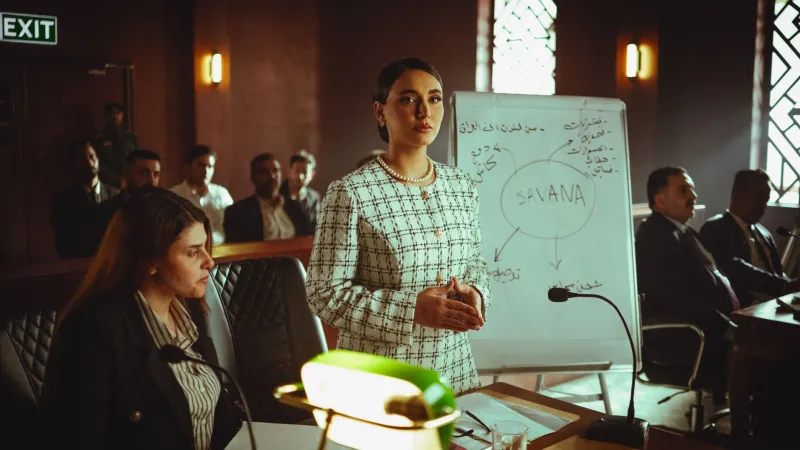
There's a particular kind of silence that settles over a pitch meeting when a founder walks in and the room doesn't recognize itself in her. The investor across the table has never navigated a hyphenated identity. Never translated a business idea for a parent who came to this country with two suitcases and a prayer. Never had to explain, in the same breath, both a market opportunity and why it matters to a community that rarely gets counted.
That silence is something a growing number of Arab-American women in venture capital know intimately — because they've sat on both sides of the table.
And now, they're doing something about it.
From Overlooked to Writing the Checks
The numbers around VC funding have been grim for years, and they're especially stark for founders who are women, immigrants, or both. According to data from Crunchbase, female founders receive a fraction of total venture funding annually — and when you layer in ethnicity and immigrant status, the gap becomes a canyon.
But something is shifting. A cohort of Arab-American women — some who built their own companies first, others who climbed through finance and consulting — are now sitting in rooms where capital decisions get made. And they're bringing a fundamentally different lens to the table.
Take the broader pattern you see across this community: these aren't investors who stumbled into the role. Many of them had to fight for every seat they occupy. They know what it looks like when a founder is being dismissed not because their idea is weak, but because the investor can't imagine the market. That gap in imagination? It's actually a gap in returns.
"When you've been the person who had to over-explain and over-prove, you develop a very specific radar for founders who are doing the same," one Arab-American angel investor told Al Farra. "And those founders are often building things that are going to be enormous — they just need someone in the room who gets it."
The Cultural Network Is the Competitive Advantage
One of the things that makes Arab-American women particularly powerful in this space is something that Silicon Valley has historically undervalued: the cultural network.
Arab-American communities in the U.S. are deeply interconnected — across cities, industries, and generations. Dearborn, Michigan. Houston's Westheimer corridor. Bay Ridge in Brooklyn. The Arab-American enclaves scattered across Los Angeles. These aren't just neighborhoods; they're ecosystems. And for investors who grew up inside them, they represent a pipeline of talent and deal flow that traditional VC firms simply don't have access to.
There's also the diaspora dimension. Arab-American investors often maintain strong ties to the Middle East and North Africa, giving them a window into emerging markets, cross-border business models, and consumer behaviors that are increasingly relevant as global commerce evolves. That's not a soft advantage — it's a structural edge.
"My network spans three continents and two languages," said one investor with roots in Lebanon who now runs a fund focused on underrepresented founders. "When I'm evaluating a founder building something for a diaspora community, I don't need a market research report. I am the market research."
Systemic Barriers Don't Disappear — They Just Get Navigated
It would be easy to tell this story as a clean, triumphant arc. Women broke through. The end. But the reality is messier and more honest than that.
Many of the Arab-American women now in VC positions are quick to name the obstacles that didn't vanish — they just got worked around. The old-boy networks that still dominate certain fund structures. The subtle ways that cultural identity gets coded as a liability rather than an asset in certain boardroom conversations. The pressure to downplay parts of their background to be taken seriously, only to later reclaim those same parts as the source of their competitive edge.
There's also the particular challenge of being Arab and Muslim in a post-9/11 America that has never fully resolved its complicated relationship with the community. Navigating that in professional spaces — especially in finance, where relationships and trust are everything — requires a kind of emotional labor that doesn't show up on a term sheet.
But here's the thing: that navigation builds something. It builds resilience, pattern recognition, and an ability to read rooms that most investors would pay for if they could.
The Founders They're Finding
Ask these investors who they're backing, and the answers reveal a lot about what gets missed when capital stays concentrated in the same hands.
There are immigrant founders building fintech solutions for communities that are underbanked and underserved — people sending remittances, navigating credit systems they weren't born into, managing finances across currencies and borders. There are founders building in Arabic-language media and content, serving a U.S. audience that's larger and younger than most advertisers realize. There are health tech entrepreneurs focused on communities where cultural stigma around certain conditions has created massive, unmet demand.
These aren't niche plays. These are businesses solving real problems for real people — and they're being built by founders who lived those problems firsthand. The Arab-American investors writing the checks aren't just being charitable. They're being smart.
"The best investment thesis I have is pretty simple," one angel investor explained. "Find the person who's lived the problem, understands the community, and has the drive to build the solution. That person has been overlooked by traditional VC for decades. That's where the opportunity is."
What Comes Next
The movement is still early. Arab-American women in venture capital remain a small slice of an industry that itself remains stubbornly homogeneous. But the infrastructure is building. Mentorship networks. Angel syndicates. Emerging fund managers who are actively cultivating the next generation of investors from within the community.
There's also a growing willingness to be visible — to show up in spaces, tell the story publicly, and let the next Arab-American woman who's considering a career in finance know that the seat exists and someone who looks like her is already in it.
At Al Farra, we think about culture as something that moves — it doesn't sit still, it doesn't stay in one room, and it doesn't stay in one industry. What these women are doing in venture capital is, at its core, a cultural act. They're taking the values that defined their communities — generosity, loyalty, the obligation to bring others along — and deploying them inside one of the most consequential systems in American economic life.
The returns, we suspect, are going to be remarkable. On every measure that counts.