Dancing Back to Roots: The Arab-American Communities Keeping Dabke, Belly Dance, and Classical Music Alive
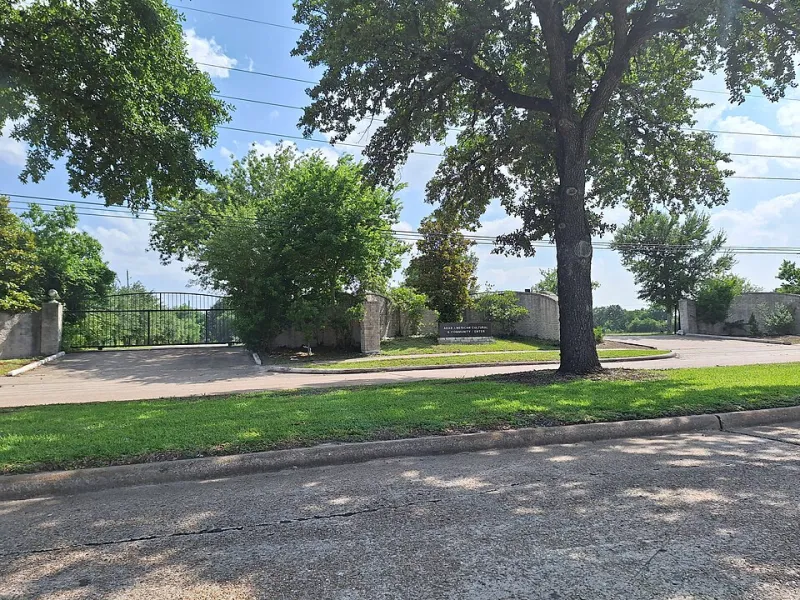
Photo: WhisperToMe, CC0, via Wikimedia Commons
There's a moment in every dabke performance — usually somewhere around the third or fourth stomp — where something clicks. The line of dancers locks in, the rhythm becomes collective, and for a few seconds, nobody in that circle is thinking about anything else. Not work, not school, not the complicated business of being Arab in America. Just the music, the movement, and each other.
That moment is the whole point. And across the United States — from Dearborn to Detroit, from Bay Ridge, Brooklyn to the suburbs of Houston — more and more Arab-Americans are actively seeking it out.
A Revival That's Been Building Quietly
The resurgence of traditional Arab music and dance in American communities didn't happen overnight, and it didn't happen on a stage. It happened in basements and church halls. In Zoom calls during lockdown. In Instagram Live sessions where a oud player in New Jersey taught scales to a teenager in San Diego who'd never touched the instrument but felt pulled to it anyway.
What's driving this? A few things, depending on who you ask. For older generations, it's preservation — a fear that something irreplaceable is slipping away. For younger Arab-Americans, it's more personal. Many grew up in households where cultural practices were quietly set aside to ease the work of assimilation. Now, in their twenties and thirties, they're circling back. Asking questions. Wanting to know what their grandparents danced at weddings, what songs their great-aunts hummed in the kitchen.
"I grew up hearing Arabic music at family events, but I never learned anything about it formally," says Kareem Nassar, 28, a Syrian-American who started taking dabke lessons at a community center in Dearborn three years ago. "When I finally stepped into that class, it felt like something I'd been missing without knowing it."
Dabke: More Than a Dance
For those unfamiliar, dabke is a Levantine line dance traditionally performed at celebrations — weddings, festivals, community gatherings. Dancers link arms or hold hands, stomping in unison to a driving rhythm. It's joyful, it's athletic, and it's deeply communal in a way that's hard to replicate.
In cities with significant Arab-American populations, dabke troupes have become important community anchors. Groups like the Arab American Cultural Center in Chicago and the Palestinian Cultural Center in the DC metro area run youth dabke programs that function as much as social infrastructure as they do dance instruction. Kids who join these groups aren't just learning footwork — they're building friendships, developing cultural pride, and often finding a sense of belonging that can be hard to come by when you exist between two worlds.
There's also a growing fusion scene that's catching on with younger audiences. Choreographers are blending dabke with hip-hop, contemporary dance, and even capoeira, creating performances that honor the form's roots while speaking to the hybrid experience of being Arab-American. These shows are selling out small venues in cities like Los Angeles and New York, drawing crowds that are as diverse as the choreography itself.
Belly Dance, Reclaimed
Belly dance — or raqs sharqi, as it's known in Arabic — has had a complicated journey in the American imagination. For decades, it was filtered through an Orientalist lens that stripped it of cultural context and turned it into something exotic and other. The current revival in Arab-American communities is, in part, a deliberate act of reclamation.
Instructors like Layla Haddad, a Lebanese-American dancer and teacher based in Chicago, are insistent about this framing. "When I teach, the first thing I do is give people the history," she says. "This is a form that belongs to us. It comes from our celebrations, our rituals, our understanding of the body. Reconnecting with that is powerful."
Haddad's classes draw a mix of Arab-American women of all ages — some who grew up watching their mothers dance at family parties, some who are encountering the form for the first time. She describes the classes as part movement workshop, part cultural education, and part therapy. "Women come in carrying a lot — shame about their bodies, disconnection from their heritage, stress from daily life. And then they start moving, and something opens up."
The mental health dimension of this is increasingly being recognized. Cultural practitioners and community organizers across the country are noting that participation in traditional art forms correlates with stronger sense of identity, reduced feelings of isolation, and greater overall wellbeing — particularly for second- and third-generation immigrants navigating dual cultural identities.
The Sound of the Oud at 2 AM
If dabke and belly dance are experiencing grassroots revivals, classical Arabic music — the oud, the qanun, the riq, the deep tradition of maqam — is finding new life through a slightly different channel: the internet.
YouTube tutorials, Instagram reels, and Discord servers dedicated to Arabic music theory have created a global classroom that didn't exist a generation ago. Young Arab-Americans who might never have had access to formal instruction are now learning to play instruments their grandparents brought from Beirut, Cairo, or Damascus.
Faris Al-Amin, a 25-year-old oud player from Houston, taught himself through online resources before finding a mentor through a local Arab cultural association. He now performs at community events and has started teaching beginner workshops. "The oud has this sound that goes straight to something deep," he says. "When I play, I feel connected to something much bigger than myself. I think a lot of Arab-Americans are hungry for that."
That hunger is also showing up in fusion music — projects that blend Arabic maqam with jazz, R&B, and electronic production. These collaborations are generating real buzz in independent music circles and introducing Arabic musical traditions to audiences who might never have sought them out otherwise.
What the Revival Really Means
At its core, what's happening in Arab-American communities around music and dance is a conversation about identity — who we are, where we come from, and what we want to carry forward. It's happening in community workshops and on digital platforms, in formal performances and in living rooms where someone's uncle just picked up a darbuka for the first time in twenty years.
For many participants, the benefits go beyond the cultural. They're social, emotional, even physical. Movement and music are ancient medicines, and communities that have historically used them as such are rediscovering why.
At Al Farra, this is exactly the kind of story we're here to tell — the one about a community choosing to hold onto what matters, and finding new ways to share it with the world. The stomp of dabke. The sweep of a dancer's arm. The first note of an oud in a quiet room. These things don't disappear. They just wait to be remembered.