Open for Business, Open for Everyone: How Arab-American Corner Stores Became the Soul of Their Neighborhoods
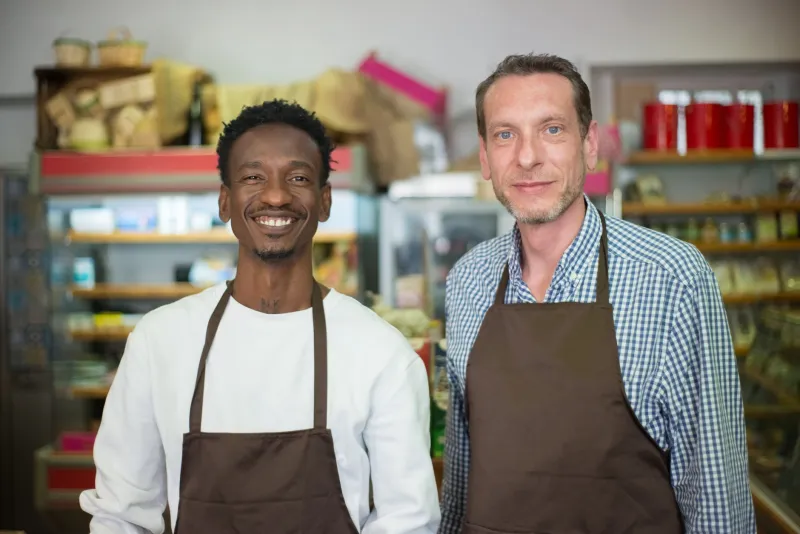
The bell above the door has been ringing since 1987. That's the year Khalil Mansour opened a small grocery on the east side of Detroit with $4,000 in savings, a borrowed van, and a handwritten inventory list his wife helped him draft at their kitchen table. Today, his son Ramzi runs the place. The shelves are the same. The regulars are mostly different — some of them are the children of the people who used to come in — but the rhythm is identical. Someone needs change. Someone else needs a favor. A neighbor drops off a plate of food. A delivery driver parks out front and grabs a coffee without paying because Ramzi says he never has to.
This is what a neighborhood institution looks like from the inside.
Across the United States — in Dearborn and Detroit, in Brooklyn and Bay Ridge, in Anaheim and Houston — Arab-American families have spent decades building small businesses that quietly became load-bearing walls in their communities. Corner stores. Bodegas. Halal markets. Bakeries. These aren't just places to buy groceries. They're infrastructure.
More Than a Transaction
There's a concept in Arabic culture called barakah — a kind of blessed abundance that flows through generosity and good intention. Ask almost any Arab-American store owner why they extend credit to a struggling customer or stay open late for a family in a pinch, and they probably won't use that word. But they'll describe exactly what it means.
"My father never turned anyone away," says Nadia Haddad, who co-manages a halal market in Paterson, New Jersey, that her family has operated for over thirty years. "If someone didn't have enough, he'd make up the difference. He said the money always found its way back. And it did. That's just how we were raised to do business."
This philosophy — deeply rooted in Arab traditions of hospitality and communal obligation — has shaped the way these stores operate in ways that no MBA program quite captures. The store becomes a social node. Word travels through it. People leave messages for each other there. Elders stop in not because they need something but because they need somewhere.
Urban planners have a name for spaces like this: third places, the informal gathering spots that exist outside of home and work. Arab-American corner stores have been filling that role for generations without anyone writing a think piece about it.
The Weight of the Counter
Running one of these businesses isn't romantic. It's brutal, unglamorous work — early mornings, late nights, thin margins, and an unrelenting pressure to compete with chain retailers who can undercut on price without breaking a sweat.
Sameer Yousef, who took over his uncle's convenience store in South Chicago in his mid-twenties, laughs when he hears people describe small business ownership as a dream. "It's a dream if you don't mind sleeping four hours a night," he says. "I've missed weddings. I missed my cousin's graduation. The store doesn't take days off."
And yet he's still there, twelve years in, with no plans to leave. Because the business has become something he can't quite separate from his identity. His kids come in after school. His mother stocks the shelves on Saturdays. There's a photo on the wall behind the register of his uncle cutting the ribbon on opening day — young, grinning, holding scissors like he just won something.
In many ways, he had.
Navigating the New Landscape
The retail world these families built their businesses in looks nothing like it did thirty years ago. E-commerce, app-based delivery, dollar store chains proliferating on every block — the competition is relentless and often tilted against small operators.
But Arab-American store owners have shown a striking ability to adapt without abandoning what makes their businesses distinct. Many have leaned into specialization, stocking imported goods you simply can't find on Amazon: specific brands of za'atar, specialty dates, particular cuts of halal meat, hard-to-source spices that diaspora customers grew up cooking with.
"We're not trying to be Walmart," says Lina Khalaf, who runs a specialty grocery in the Los Angeles neighborhood of Anaheim alongside her mother and brother. "We're trying to be the place you call when you can't find something anywhere else. That's our lane."
Others have embraced social media as a way to reach second and third-generation Arab-Americans who might not live in traditional enclave neighborhoods but still crave those familiar flavors. A TikTok showing a fresh batch of ka'ak or a reel about how to use black seed oil can move product fast — and build a following that extends far beyond the zip code.
When the Kids Take Over
The generational handoff is one of the most charged moments in any family business — and Arab-American stores are no exception. The children who grew up stocking shelves and making change often have complicated feelings about inheriting the family operation.
Some leave for college, build careers elsewhere, and eventually come back — sometimes by choice, sometimes by circumstance. Others never left and spent years quietly absorbing everything their parents knew. A few have transformed the business entirely, adding catering operations, launching online stores, or pivoting toward specialty retail.
Ramzi Mansour, who took over his father Khalil's Detroit grocery, did a little of everything. He added a deli counter. He partnered with a local Arab-American caterer to sell prepared foods. He put up a small community board near the entrance where neighbors post flyers and announcements. "My dad's store was his way of saying, 'I'm here, I'm part of this,'" Ramzi says. "I just want to keep saying the same thing."
What strikes you, talking to these second-generation owners, is how seriously they take the responsibility. They're not just running a business. They're holding something for someone.
The Unofficial Social Services Department
In neighborhoods where formal support systems are thin or hard to navigate, corner stores often fill in the gaps in ways nobody planned for. Store owners become de facto translators, referral sources, and advocates — helping new immigrants figure out which bus to take, which clinic accepts walk-ins, which landlord is trustworthy.
"People ask me things I don't know the answer to and I find out," says Nadia Haddad. "That's just part of it. You're not just a store. You're a resource."
This role is rarely acknowledged publicly, and the people doing it rarely ask for recognition. It's simply the texture of how these businesses operate — woven into the daily rhythms of communities that rely on them.
Still Standing
There's something quietly radical about a family-owned corner store that's still open after three decades. In an economy that favors scale, speed, and consolidation, the stubborn persistence of these neighborhood anchors is its own kind of statement.
The bell above Khalil Mansour's door is still ringing. Ramzi's kids are starting to come in after school now, poking around behind the counter, learning where things go.
The shelves are the same. The rhythm is identical. And the door is open.