Beats, Bytes, and Belonging: The Arab-American Tech Founders Rewiring How the World Hears Middle Eastern Music
Picture this: you're at a dinner party in Dearborn, Michigan, and someone puts on Fairuz. Within minutes, half the room is humming along and the other half is pulling out their phones trying to Shazam the track. That second group? They're the problem these founders are trying to solve — and the opportunity they're betting their careers on.
Across the U.S., a quiet but genuinely exciting wave of Arab-American entrepreneurs is reshaping the music tech space. They're building platforms, tools, and audio experiences that finally give Arabic and Middle Eastern music the discoverability infrastructure it's always deserved. And they're doing it at a moment when the global appetite for non-English music has never been higher.
The Discovery Gap Nobody Was Talking About
Spotify has 100 million tracks. Apple Music isn't far behind. Yet for years, finding quality Arabic music — whether that's classic Egyptian tarab, Lebanese pop, or the growing khaleeji scene — felt like navigating a souk with no map and a dead phone battery.
The metadata problem alone is staggering. Arabic song titles get transliterated inconsistently, genre tags are wildly inaccurate, and recommendation algorithms trained mostly on Western listening habits keep steering Arabic-speaking users toward content that doesn't reflect their tastes. For the estimated 3.7 million Arab Americans in the U.S., plus the tens of millions of second- and third-generation listeners who grew up with this music in their homes, that gap has always felt personal.
"My mom would play Abdel Halim Hafez every Sunday morning," says one music tech founder based in the Bay Area who asked to be identified only by first name, Tariq. "When I got into tech, I kept thinking — why is it so hard to find his contemporaries, his influences, the newer artists building on that legacy? The infrastructure just wasn't there."
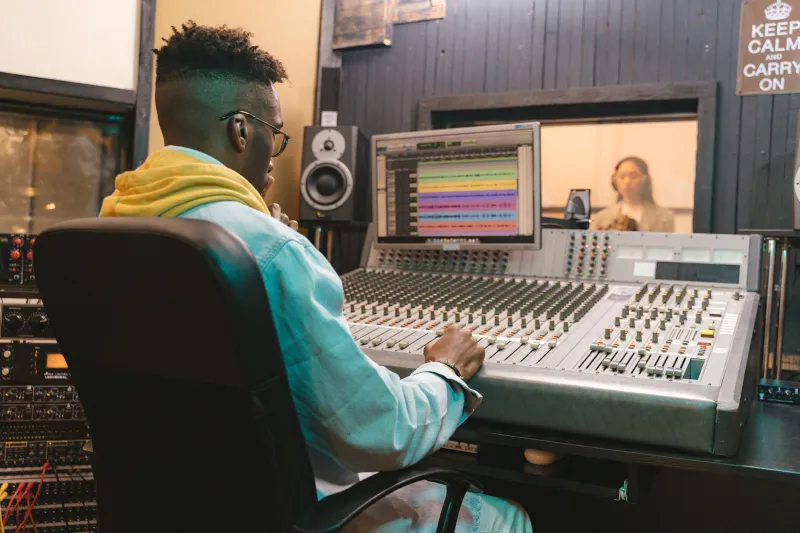
Tariq's company, which launched in beta last year, uses a combination of AI-driven audio fingerprinting and community-sourced tagging to build richer metadata layers specifically for Arabic and Middle Eastern tracks. Think of it less like a streaming service and more like a cultural library with a really good search engine.
Where the Money Is Starting to Flow
The numbers are hard to ignore. The Middle East and North Africa music market is projected to hit over $500 million by 2027, according to industry analysts, with streaming accounting for an increasingly dominant share. Meanwhile, Arabic music on TikTok has exploded — tracks like Wegz's "El Bakht" and Marwan Moussa's viral moments have racked up hundreds of millions of views globally, many from listeners who had zero prior connection to Egyptian rap.
Investors are starting to pay attention. Several Arab-American-led audio startups have quietly closed seed and Series A rounds in the past 18 months, with backers ranging from Middle Eastern sovereign wealth-adjacent funds to mainstream Silicon Valley VCs who see the "non-English music" category as one of the last genuinely underserved verticals in streaming.
"Everyone's chasing the Latin market because the playbook is already written," notes one venture-backed founder who's building a B2B audio localization tool for Arabic content. "The Arabic market is earlier, which means more risk, but also way more upside. And honestly, the artists are incredible — the talent isn't the problem. Distribution and discovery are the problems."
More Than Just Streaming
Not every Arab-American founder in this space is building a Spotify competitor. The innovation is happening across the entire audio stack.
There are companies working on Arabic-language podcast infrastructure — because while podcasting has exploded in the Arab world, the tools that Western creators take for granted (dynamic ad insertion, chapter markers, listener analytics) have lagged badly for Arabic-language producers. Others are building music education platforms that teach maqam theory — the modal scale system at the heart of Arabic music — in ways that are actually accessible to American-born kids who want to connect with their heritage without sitting through a dry conservatory curriculum.
Then there's the live events angle. A handful of startups are tackling the ticketing and discovery problem for Arabic concerts in the U.S., where a major Lebanese pop star can sell out a venue in Dearborn or Anaheim but remain completely invisible to mainstream concert discovery platforms like Ticketmaster or Bandsintown.
"The artist might have 2 million Instagram followers, but if you search for them on any major ticketing site, nothing comes up," says Lena, a founder based in Los Angeles who's building a vertical ticketing platform for Arab and Middle Eastern artists touring North America. "We're leaving real money on the table, and more importantly, we're leaving fans in the dark."
The Cultural Stakes
For the founders Al Farra spoke with, this isn't purely a business play. There's a cultural urgency running underneath the pitch decks and cap tables.
Arab-American communities have long wrestled with a visibility problem — a sense that their culture shows up in American life only in narrow, often unflattering ways. Music is one of the few spaces where that narrative flips. Arabic music is genuinely, undeniably extraordinary. The vocal tradition alone — the microtonal inflections, the improvisational mawwal, the sheer emotional range — is something that stops people cold when they actually hear it.
These founders want to engineer those moments of stopping-cold at scale.
"When a non-Arab person discovers Umm Kulthum for the first time and just loses their mind over it, that's not a niche thing anymore," Tariq says. "That's a universal human experience. We just need better pipes to get people there."
There's also a generational handoff happening in real time. Younger Arab Americans — the ones who grew up toggling between Kendrick Lamar and Nancy Ajram on the same playlist — are hungry for tools that reflect their hybrid musical identities. They don't want to choose between their cultural inheritance and their American present. The best founders in this space are building for exactly that in-between space.
What Comes Next
The honest answer is that nobody knows exactly how this market shakes out. A few of these startups will get acquired by major streaming platforms looking to beef up their Arabic-language offerings. Some will build sustainable independent businesses. Others will flame out, as startups do.
But the direction of travel feels clear. Arabic music is no longer a niche that the tech industry can afford to ignore. The audience is too large, the talent is too compelling, and — crucially — there are now enough Arab-American founders inside the industry who understand both the cultural nuance and the technical infrastructure needed to build something real.
The souk has always had incredible music playing in it. These founders are just finally building the speakers loud enough for everyone to hear.