Lifting the Silence: Arab-American Mental Health Voices Are Changing the Conversation
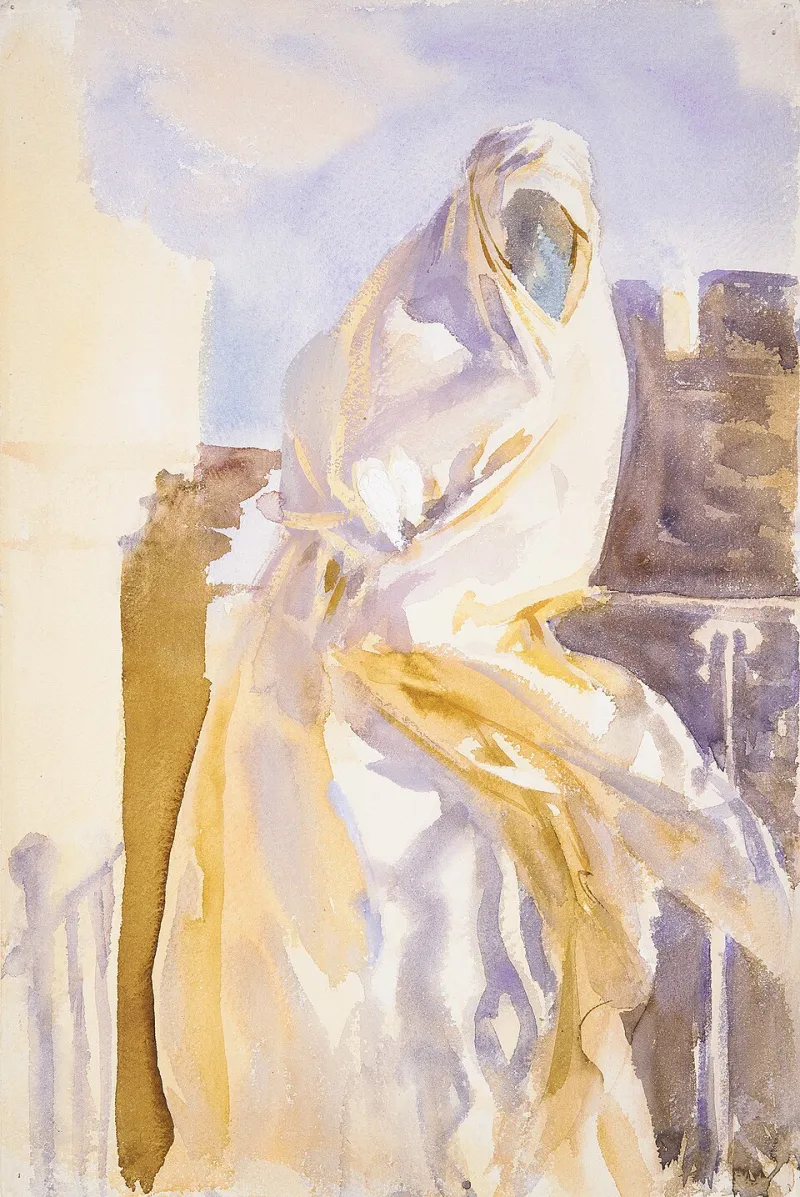
Photo: John Singer Sargent, CC0, via Wikimedia Commons
For a long time, Hana Aziz didn't have a word for what she was going through. The sleeplessness, the weight in her chest that wouldn't lift, the way certain conversations with her family left her feeling hollowed out — none of it had a name she was allowed to say out loud. She was Lebanese-American, raised in a household where struggle was something you carried quietly, where seeking outside help was viewed as a kind of admission of family failure.
"The message I got growing up was: you pray, you push through, you don't air your problems to strangers," says Hana, now 34 and living in Houston. "Therapy was for people who had really lost it. Not for us."
She finally made her first therapy appointment at 31 — and describes it as one of the most disorienting and ultimately life-changing decisions she's ever made. "My therapist was Arab-American too, which made a huge difference. She got the family dynamics without me having to explain everything from scratch."
Hana's story isn't unusual. And the therapist who helped her — along with a growing network of Arab-American mental health practitioners across the country — is part of a quiet but meaningful shift happening inside communities that have long kept their inner lives tightly guarded.
The Numbers Tell a Complicated Story
Data on Arab-American mental health utilization is frustratingly limited, in part because Arab Americans aren't consistently counted as a separate demographic in federal health surveys. But what research does exist paints a clear picture of underservice.
A 2021 study published in the Journal of Immigrant and Minority Health found that Arab-Americans report significantly lower rates of mental health service use compared to the general US population, even when controlling for income and insurance status. Researchers point to a cluster of overlapping barriers: cultural stigma, distrust of Western clinical frameworks, language gaps, and a scarcity of culturally competent providers.
Post-9/11 trauma, ongoing geopolitical violence affecting families with roots in the Middle East, and the particular stress of navigating a hyphenated identity in America all compound these pressures. Many Arab-Americans are managing grief, displacement, and intergenerational trauma without any formal support structure — and often without language to describe what they're experiencing as a mental health need at all.
"We're dealing with a community that has faced enormous collective stress, and yet the infrastructure to support that community mentally and emotionally is still really underdeveloped," says Dr. Youssef Barakat, a clinical psychologist based in Dearborn, Michigan, who specializes in Arab and Muslim American populations. "Part of my work is just normalizing the idea that needing help is human — it's not weakness, it's not shameful, it's not un-Islamic or un-Arab."
Reframing the Conversation
Dr. Barakat is one of a growing number of Arab-American mental health professionals who have taken their work beyond the therapy room and into public-facing spaces — Instagram accounts, YouTube channels, community panels, and podcast appearances — specifically to reach people who would never walk through a clinic door on their own.
The strategy is deliberate. Rather than waiting for stigma to dissolve on its own, these advocates are meeting people where they already are: on their phones, in their feeds, inside the cultural references and family dynamics that shape their daily lives.
Sana Khalid, a licensed therapist and content creator based in New Jersey, has built a following of over 80,000 people on Instagram by posting in both English and Arabic about topics like intergenerational trauma, people-pleasing, and the emotional labor of being "the strong one" in an Arab family. Her content doesn't feel clinical. It feels like a conversation with someone who actually gets it.
"I use humor, I use relatable scenarios, I talk about things my aunties would say," Sana explains. "Because if I show up sounding like a textbook, I've already lost the person I'm trying to reach. They'll scroll right past."
Her most-shared posts are often the ones that name something people have felt for years but never had words for — the guilt of setting a boundary with a parent, the loneliness of being misunderstood by a non-Arab partner, the exhaustion of carrying everyone else's emotional weight.
The Role of Faith and Family
One of the more nuanced challenges facing Arab-American mental health advocates is navigating the relationship between therapy and religion. In many Arab households — Muslim and Christian alike — spiritual counsel from an imam, priest, or trusted elder has traditionally served as the primary (and often only) resource for emotional struggles.
Rather than positioning therapy as a replacement for faith, many practitioners are working to frame the two as complementary.
"I tell my clients: going to therapy doesn't mean you don't trust God," says Dr. Barakat. "It means you're using the tools available to you. We go to the doctor when we're physically sick. This is the same thing."
Family dynamics add another layer of complexity. In many Arab-American households, individual mental health is deeply entangled with family reputation. Seeking therapy can feel like exposing the family to outside judgment — or worse, like betraying the collective for the sake of the individual.
Advocates are pushing back on this framing by emphasizing that healing one person often heals a system. "When one person in a family gets support, it changes how they show up for everyone else," says Sana. "It's not selfish. It's actually one of the most generous things you can do for the people you love."
Building Infrastructure, Not Just Awareness
Social media reach is meaningful, but advocates know that awareness alone doesn't fix access. Several Arab-American mental health organizations have emerged in recent years specifically to address the structural gaps.
Groups like the Arab American Family Services in Illinois and the National Arab American Medical Association have expanded mental health programming in recent years, while newer initiatives like the Nafs project — an online directory of Arab and Muslim-identified therapists — are helping people find culturally matched providers without the exhausting trial-and-error process that often discourages people from continuing.
For Hana in Houston, the path forward looks different than she imagined it would a few years ago. She's now open about her therapy journey with friends and even, cautiously, with some family members. A few of them have started asking questions.
"My cousin called me last month and asked me how I found my therapist," she says, and her voice shifts a little. "That conversation would not have happened five years ago. Not a chance."
Small shifts. Real ones. The silence is lifting — one conversation, one post, one open door at a time.